WRITTEN BY
Vasudhaa NarayananPUBLISHED ON
04/09/2025
The Bihar Museum Biennale: Whose stories shape a biennale of museums? In its drive to position museums as instruments of cultural diplomacy, competing histories and fragile resistances surface at the Bihar Museum Biennale.
by Vasudhaa Narayanan | Published on : Sep 04, 2025
What happens when museums, rather than artists, take centre stage at a biennale? Now in its third edition, the Bihar Museum Biennale pursues that shift, layered with its own contradictions. With a focus on fostering dialogue through shared histories, its 2025 edition continues to shift the spotlight from individual artworks to collections within state museums and cultural institutions in the Global South. At a time when global funding for the arts has declined, its opening week arguably became a balancing act of branding, political image-building and subtle acts of resistance — tensions that art festivals across the world continue to navigate.
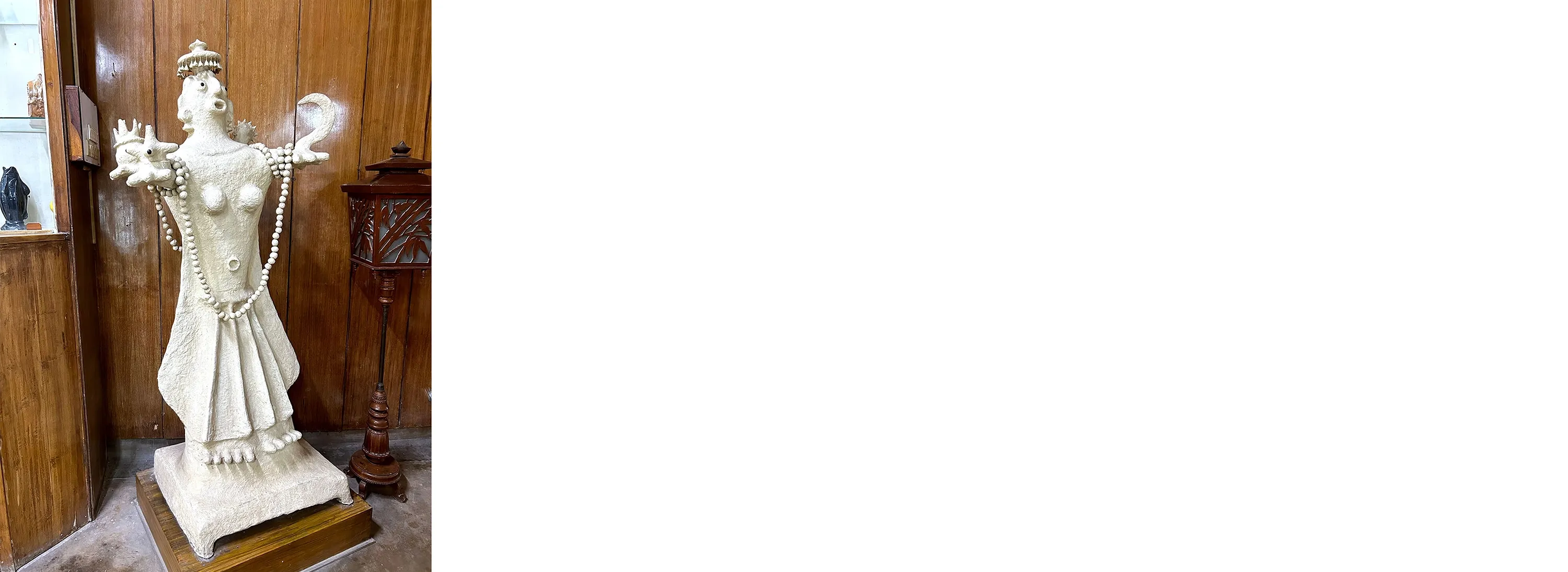 Papier-mâché sculpture, on view at Upendra Maharathi Shilp Anusandhan Sansthan, Bihar Museum Biennale, 2025
Soft diplomacy and religious narratives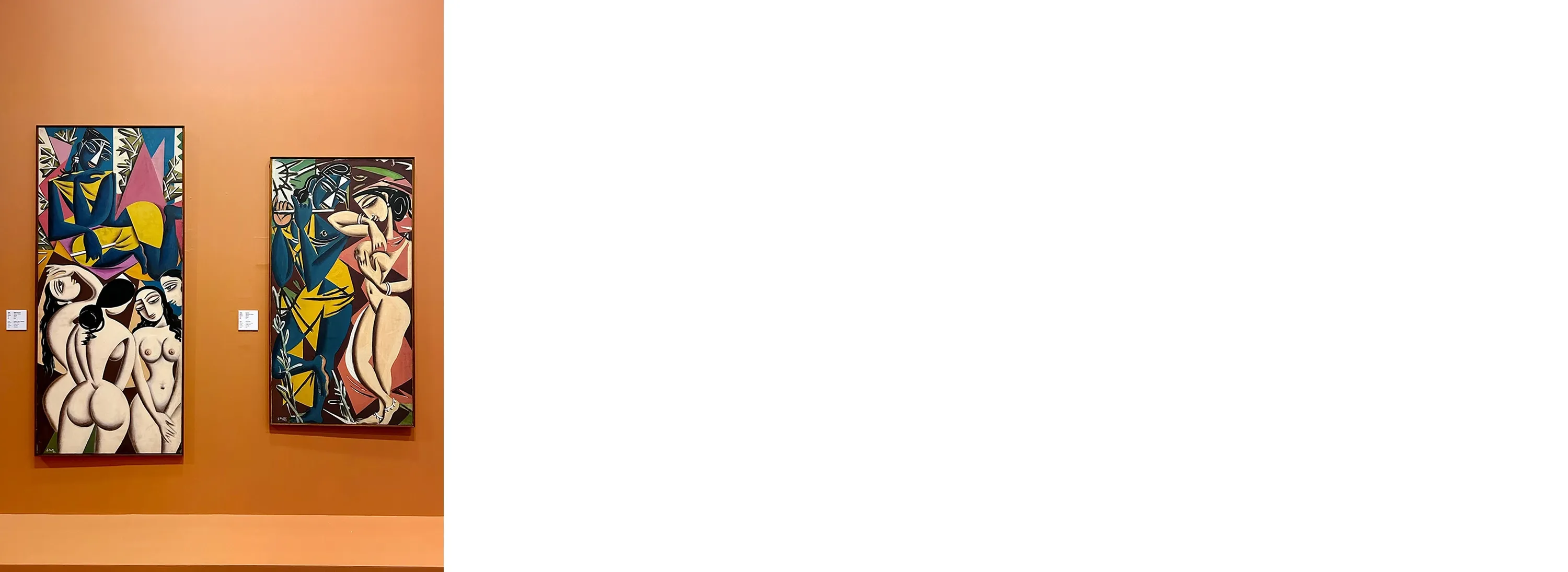 From left to right: Gopika Vastra Paharana, oil on canvas, 1952, George Keyt; Venugopal, acrylic on canvas, 1973, George Keyt, on view at Our Worlds and Ourselves: Perspectives from Asia, Africa, and Latin America, 2025, Bihar Museum Biennale
In its latest iteration, the Biennale struggled to foreground its declared theme: Global South: Sharing Histories. Curatorial texts were masked under the garb of artistic jargon and decoloniality; sculptures, textiles, clothing and paintings were largely displayed with limited context into each region’s cultural importance, artistic movement or era to represent them; and panels too seemed restricted to keynotes by panellists.
Inside the Bihar Museum, collections from NGMA and IGNCA, both generously supported by the central government, were presented under themes of ritual, identity and resistance. Masks, sculptures, paintings, prints and lithographs from Asia, Africa and Latin America aimed to build a bridge using the symbolic. While the curatorial note spoke of efforts to “reclaim the exoticised image of the Global South”, the exhibits included an unknown Ethiopian artist's painting of people queuing with empty bowls in their hands and Sri Lankan Modernist George Keyt’s cubist nudes, Gopika Vastra Paharana and Venugopal, which draw on Hindu mythology. But the presentation of these two paintings without context flattens their cultural references into mere spectacle.
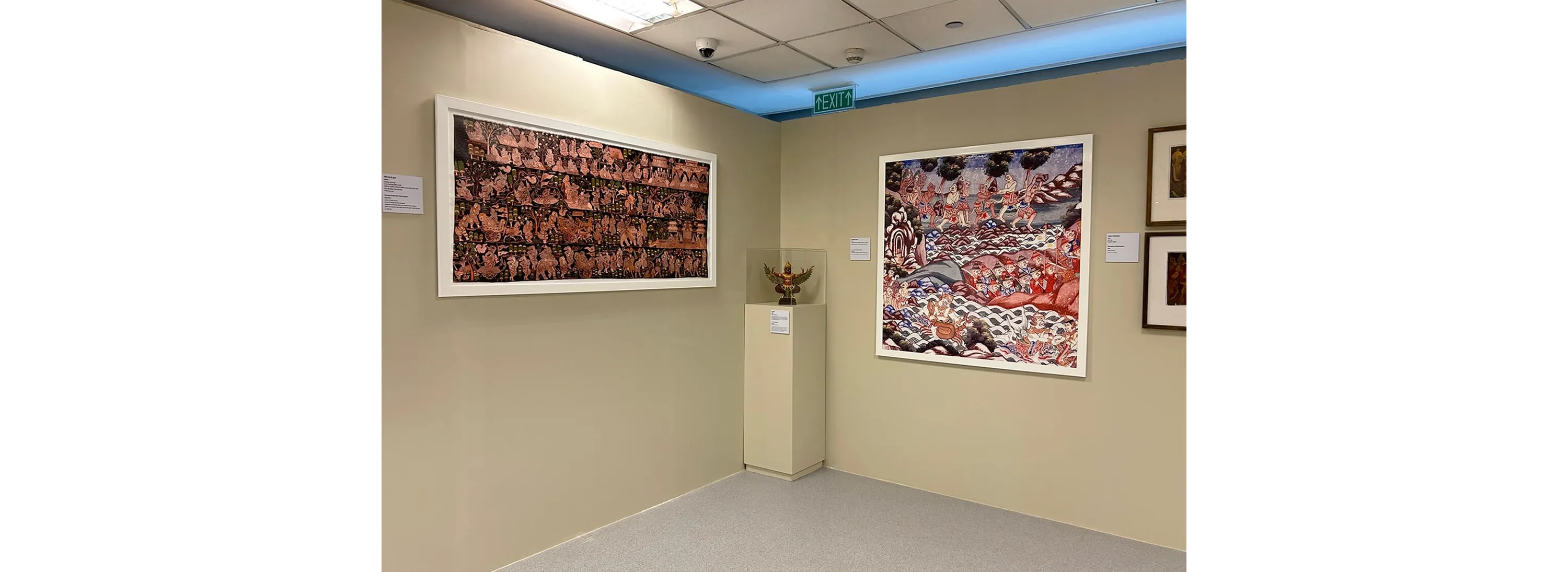 Spiritual Crossing: Masks as sacred symbols, ritual objects and theatrical journey, on view at Bihar Museum Biennale, 2025
Running through the displays was a more charged thread: religion. While the significance of masks across various cultures was presented — from ritual to religion, from shamanism to exorcism and from theatre to prayer — a section among the masks curated by IGNCA titled Ram Darbar, Indonesian retellings of the Ramayana and Mahabharata and an exhibition presented by ICCR in the children’s wing titled The Universal Legacy of Vishwaroop Ram all signalled the persistence of Hindu mythological narratives. In today’s political climate, these inevitably echo Hindutva’s push to universalise one strand of culture. Yet by showcasing Southeast Asian Ramayanas and regional adaptations, the Biennale revealed the epic’s plurality. What is often presented as singular was here fractured into many versions — a quiet counterpoint to homogenising impulses.
Sharing histories vs. missed connections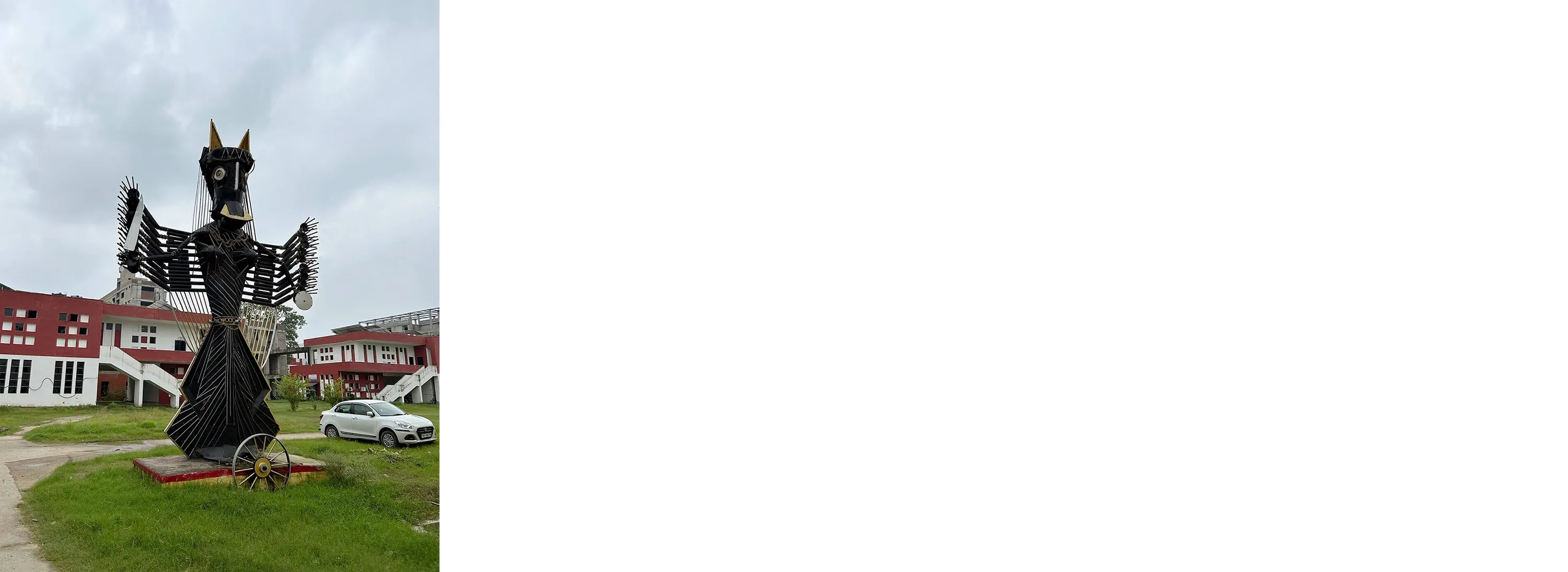 Outdoor sculpture, Upendra Maharathi Shilp Anusandhan Sansthan, 2025
Before visiting the biennale, I went to the Upendra Maharathi Shilp Anusandhan Sansthan— a research and training institute under the Department of Industries. Founded by the eponymous Indian artist, the institute champions traditional forms of Indian art with an emphasis on preserving and promoting folk, textile and craft forms indigenous to the Bihar region. Within the exhibition rooms of the institute, terracotta, papier-mâché, sikki grass weaves and sujani textiles filled its cabinets — objects that reflect everyday labour, community and memory. Artists working with stone, terracotta and papier-mâché often pushed the boundaries of their craft, where one medium mimicked the qualities of another in an attempt to blur the boundaries between medium and form. Sujani panels — embroidered by women from Bihar’s Muzzafarpur region — depict women cooking, gathering wood, making rotis; sikki sculptures render monuments, weddings and village life. Yet these objects languish in bright-lit sliding glass cabinets, displayed rather like crockery, not as living history.
"In an India where cultural spending can tend to be focused on trade summits and tourism campaigns, Bihar’s decision to fund a biennale of museums with the focus on fostering cultural dialogue across state institutions internationally is unusual and commendable."
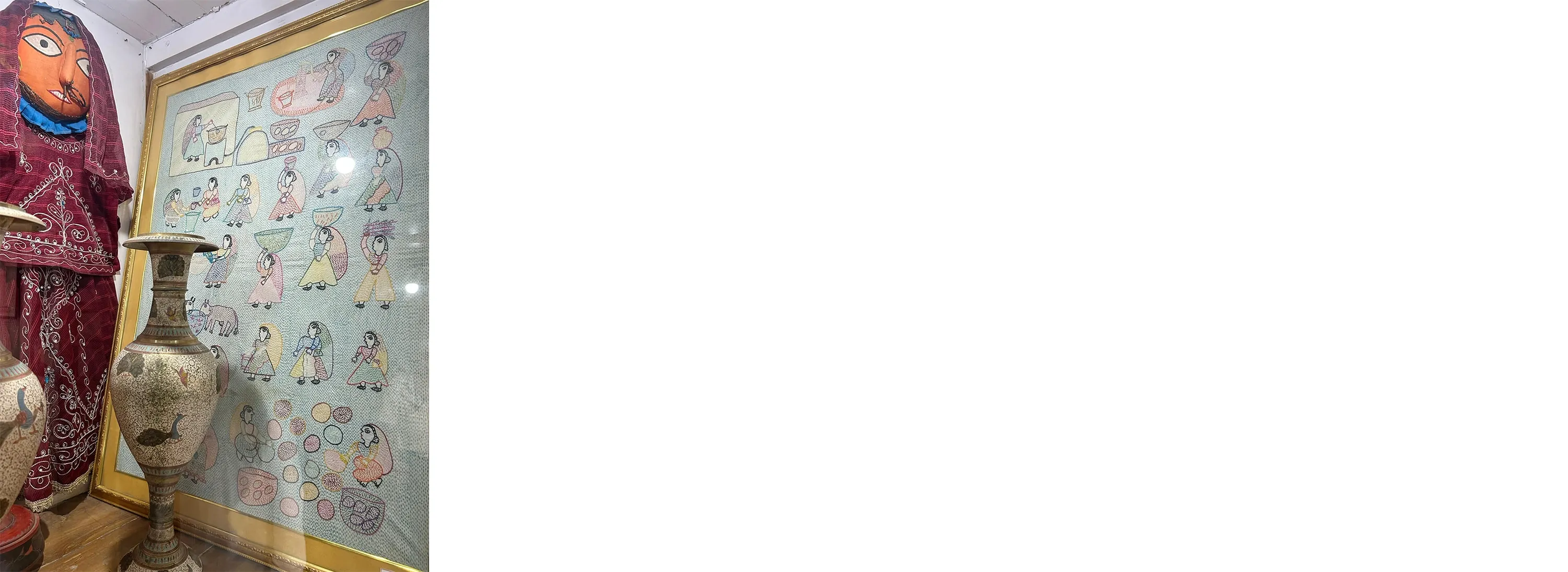 Sujani textile on view at the Bihar Museum Biennale, 2025
These are precisely the kinds of practices that should have been in dialogue with international pavilions at the Biennale. Mexico’s Living Echoes of an Ancestral Tradition, housed at the Patna Museum, highlighted the “vital role of women as keepers of knowledge, makers of form and carriers of memory.” Yet the Biennale as a whole was marked by the presence of only a few women artists and the chance to link Mesoamerican traditions with Bihar’s own was missed. Instead, visitors to the Mexico pavilion (presented by the Embassy of Mexico) encountered replicas of ritual objects, women’s clothes displayed on bust mannequins and documentary photographs of Mayan pottery.
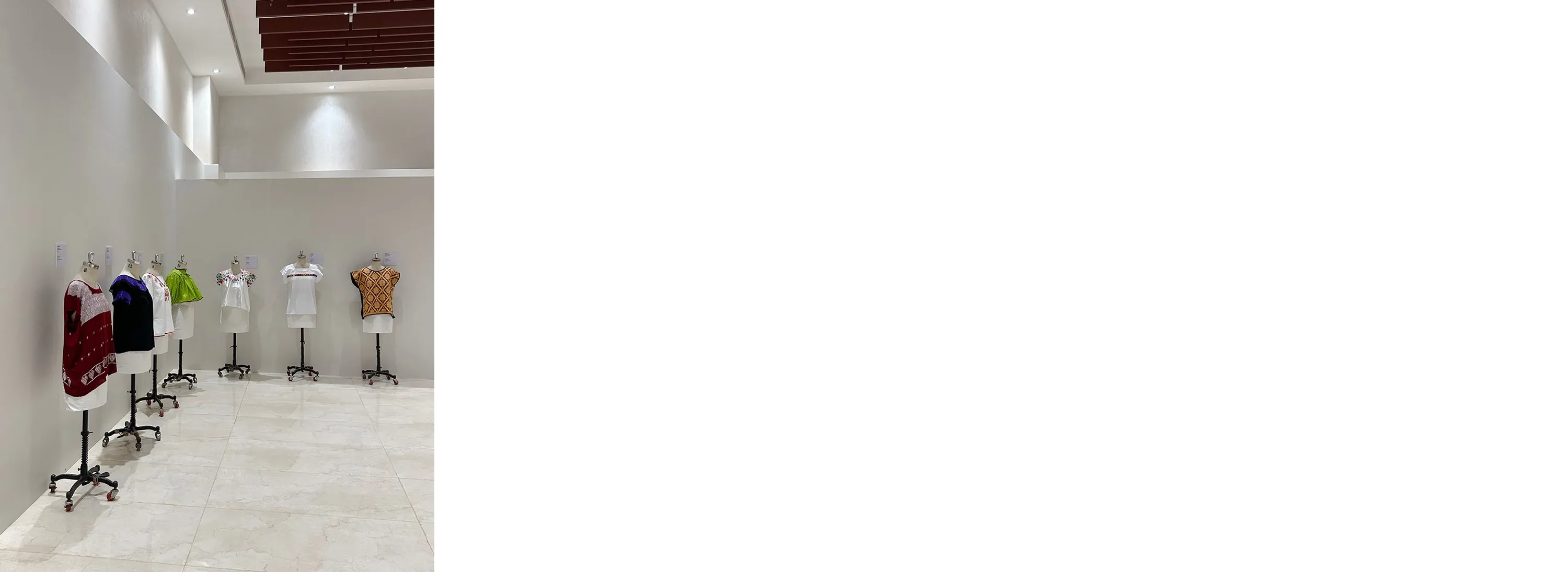 Mexico: Living Echoes of an Ancestral Tradition, textile display, on view at Bihar Museum Biennale, 2025
Image: Courtesy of STIR
Mexico: Living Echoes of an Ancestral Tradition, textile display, on view at Bihar Museum Biennale, 2025
Image: Courtesy of STIR
The pavilion Indonesia - India: A Bridge of Civilisations, organised by the Embassy along with the Ministry of Culture of the Republic of Indonesia, spoke to notions of faith, belief and ritual. The ‘bridge’ here was more explicitly explored through Wayang Golek rod puppets and Kulit shadow puppets representing figures from the Mahabharata and Ramayana, sculptures of the Balinese Keris (dagger) contextualised the object as heirloom, and ornate batik and silk textiles juxtaposed against maps of trade routes spoke to the centuries of influence across Indian, Chinese and Islamic worlds. Most importantly, the detailed descriptions of material and form allowed for a deeper engagement with the socio-cultural context of various crafts, tribes and regions within Indonesia. While the presentation was evocative and rich in transnational symbolism, perhaps the celebratory showcase stops short of further interrogating how tangled histories resonate with our layered present.
**
Counterpoints and public access**
From left to right: Scenes from the Thiri Rama, Print of Kalaga Textile Hanging, around 1870-85, U Paw Hnyun; Garuda Sculpture, Wooden Decorative Art, Thailand; Scene from Rama Thagyin, 19th Century Ramayana Manuscript Rama Thagyin, Myanmar, on view at Bihar Museum Biennale, 2025
The panel programming reflected the same contradictions. Much of it spotlighted Delhi’s cultural milieu and state figures, from ambassadors to department heads of institutions. Yet there were interventions from practitioners who reimagine museums as spaces that hold conflict, dissent and accountability. During a panel discussion titled ‘Memory, Empathy and Conflict within Museums’, Avni Sethi, the founder of Conflictorium, spoke to the idea of an artefact: as evidence shaped by the voices of the marginalised, versus a relic of the past that is reintroduced as an object of contemporary value. Sethi further proposed the possibility of museums becoming spaces that can resist collective amnesia in the era of post-truth. Mexican visual artist Eva Malhotra spoke to the importance of touch and tactility in the experience of art to build empathy and understanding. Such moments suggested the ways in which museums could become living, breathing entities.
Whose biennale?
Accessibility, however, was the clearest gap. With an entry fee of ₹100 for adults (1.15 USD), the Biennale immediately raised the question of who was welcome. For many in Patna, that price is exclusionary. Did local schools, craftspeople, or neighbourhood publics have meaningful access? Or was the audience primarily elite, diplomatic and invited?
Access is not only about tickets, it is also about language. The panels, mainly in English, often relied on the esoteric jargon of the art world. This problem is global, but in a context like Bihar, where museum culture is still in its infancy, the absence of handholding felt especially stark. How does one move through a museum? What can you touch? How do you read an artwork? A biennale of museums ought to build those bridges with care.
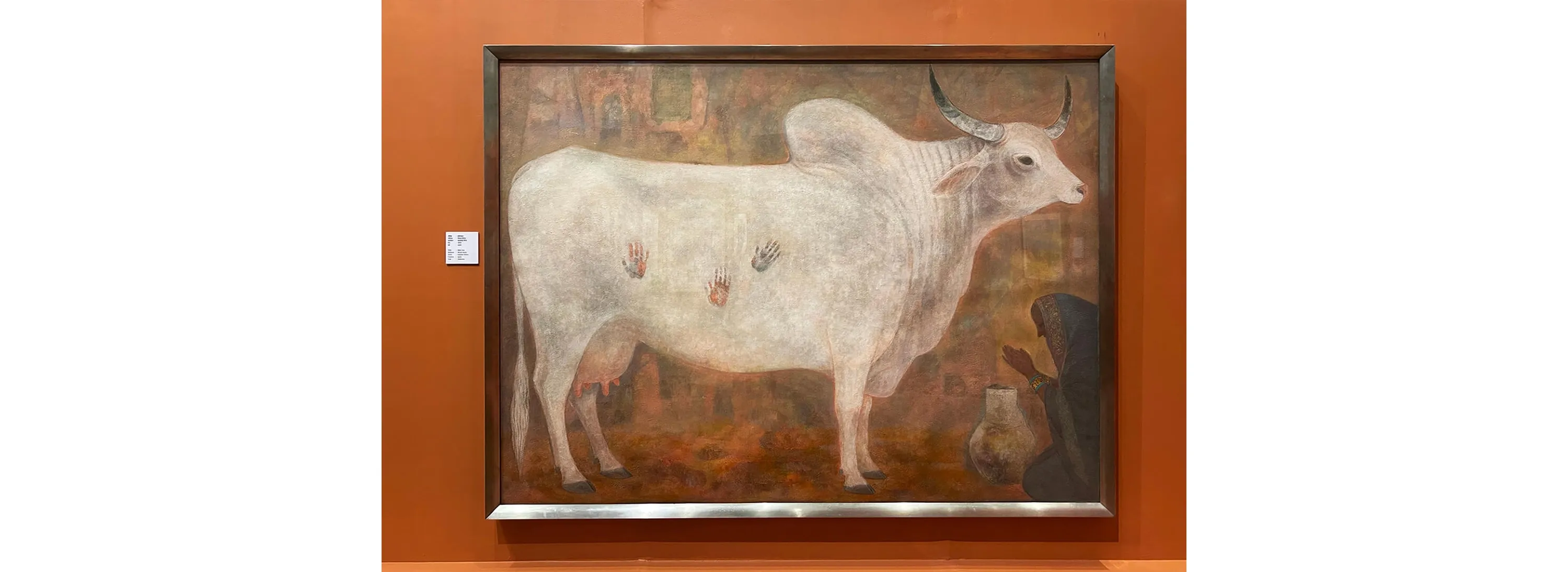 Holy Cow, mixed media, Kokosei Umino, Our Worlds and Ourselves: Perspectives from Asia, Africa and Latin America, on view at Bihar Museum Biennale, 2025
The Bihar Museum Biennale is, without doubt, a bold gesture. In an India where cultural spending can tend to be focused on trade summits and tourism campaigns, Bihar’s decision to fund a biennale of museums with the focus on fostering cultural dialogue across state institutions internationally is unusual and commendable. It shows a recognition of culture as political capital.
So I return to the provocation: Whose history? Whose biennale? In its contradictions — between Hindutva and plurality, spectacle and substance, exclusion and fragile acts of resistance, this edition of the Bihar Museum Biennale revealed both the promise and the peril of cultural production in contemporary India. Perhaps it is in those fractures that the future of museums and of cultural discourse will have to be fought for.
The views and opinions expressed here are those of the author(s) and do not necessarily reflect the official position of STIR or its editors.