


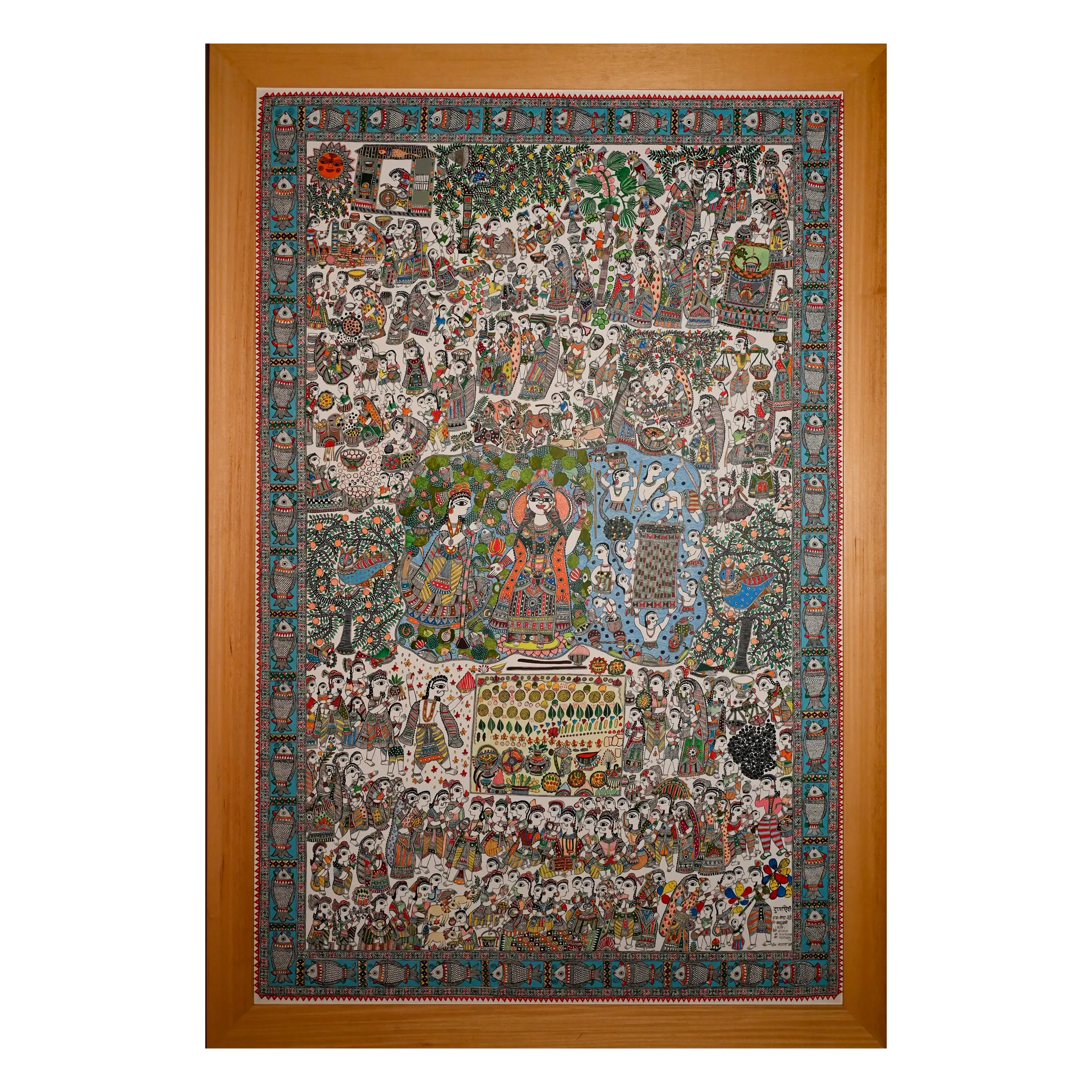
This description highlights how Padma Shri Dulari Devi (awarded in 2021) expanded the Mithila tradition in the 1980s by moving beyond mythology to depict contemporary themes and everyday life.
The painting, featured in the Bihar Museum, provides a lifelike portrayal of the fishermen community. It explores the duality of their existence: the struggle with poverty alongside a happy life integrated with nature. The work vividly illustrates the labor behind fish and makhana (fox nut) harvesting, showing men diving underwater and casting nets, and women selling the produce from baskets. Dulari Devi captures the "innermost states" of the community—grief, despair, and resilience. Specific domestic scenes include women grinding wheat at a jaata (mill), cooking, and preparing children for school. A magnificent segment depicts the worship of Goddess Kamala (Kamleshwari), including emotional scenes of riverbank puja and ritual sacrifice. The painting is noted for its high-quality coordination of colors and lines, fluid brushwork, and dynamic expressions. Consistent with tradition, a fish border frames the work, enhancing its grandeur.
