


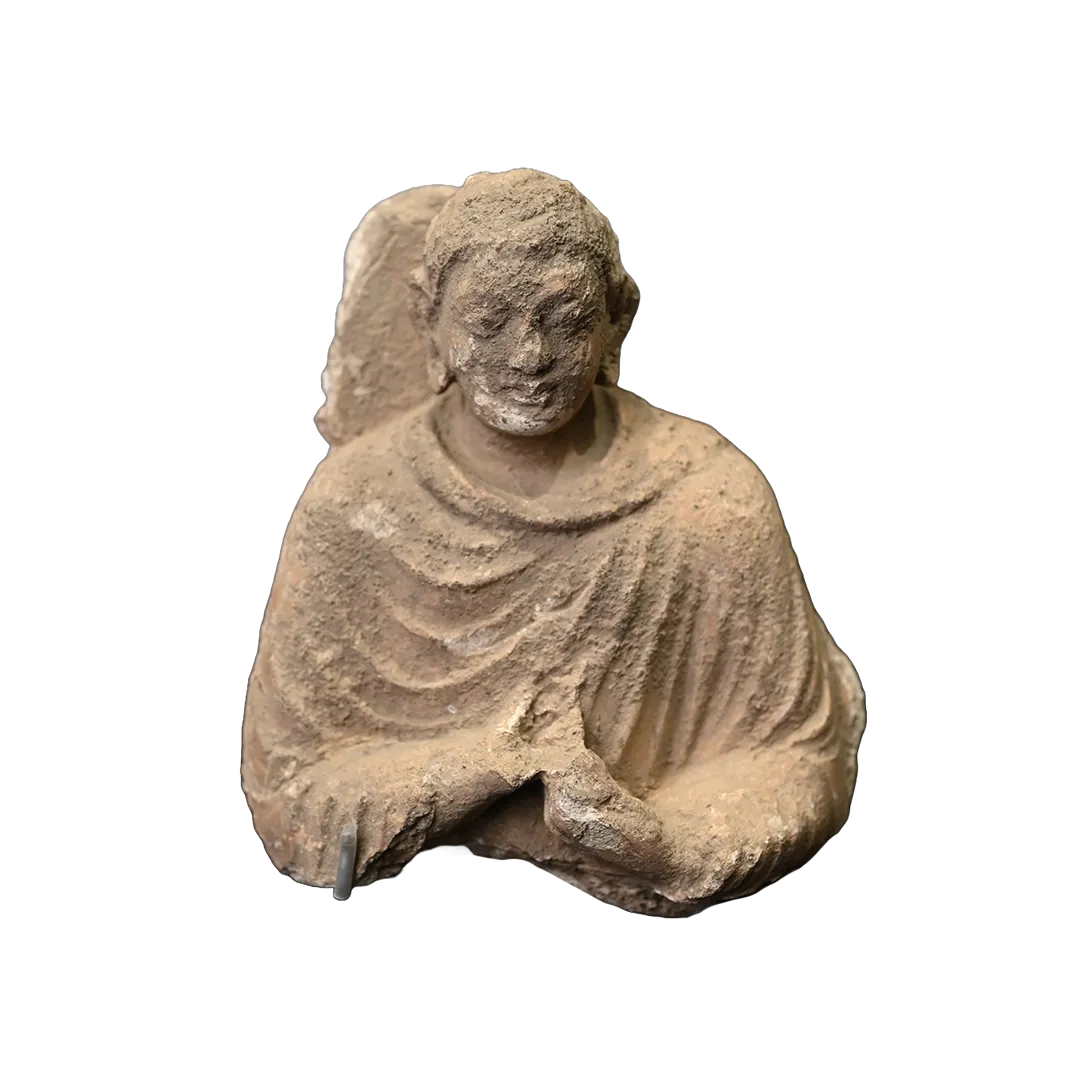
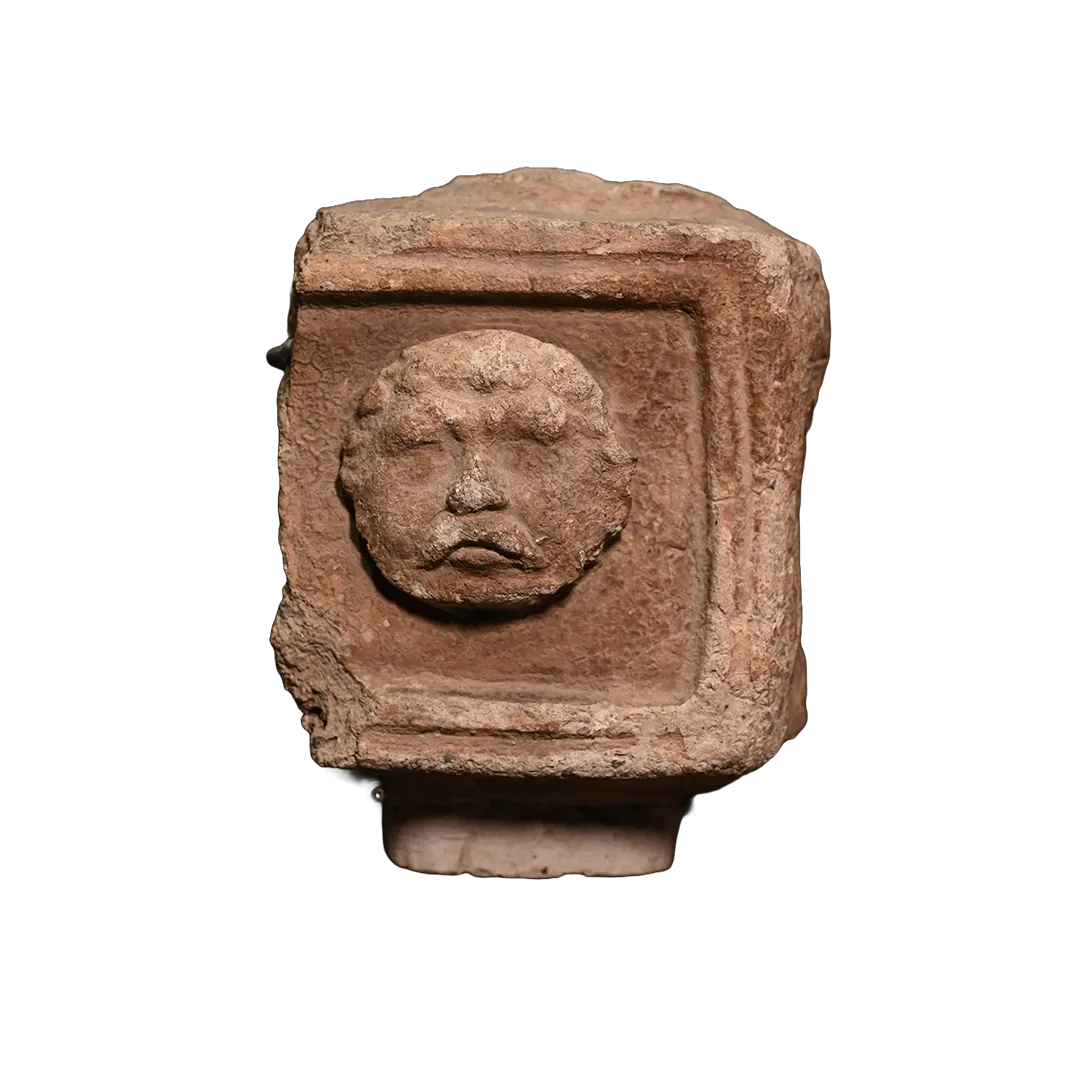
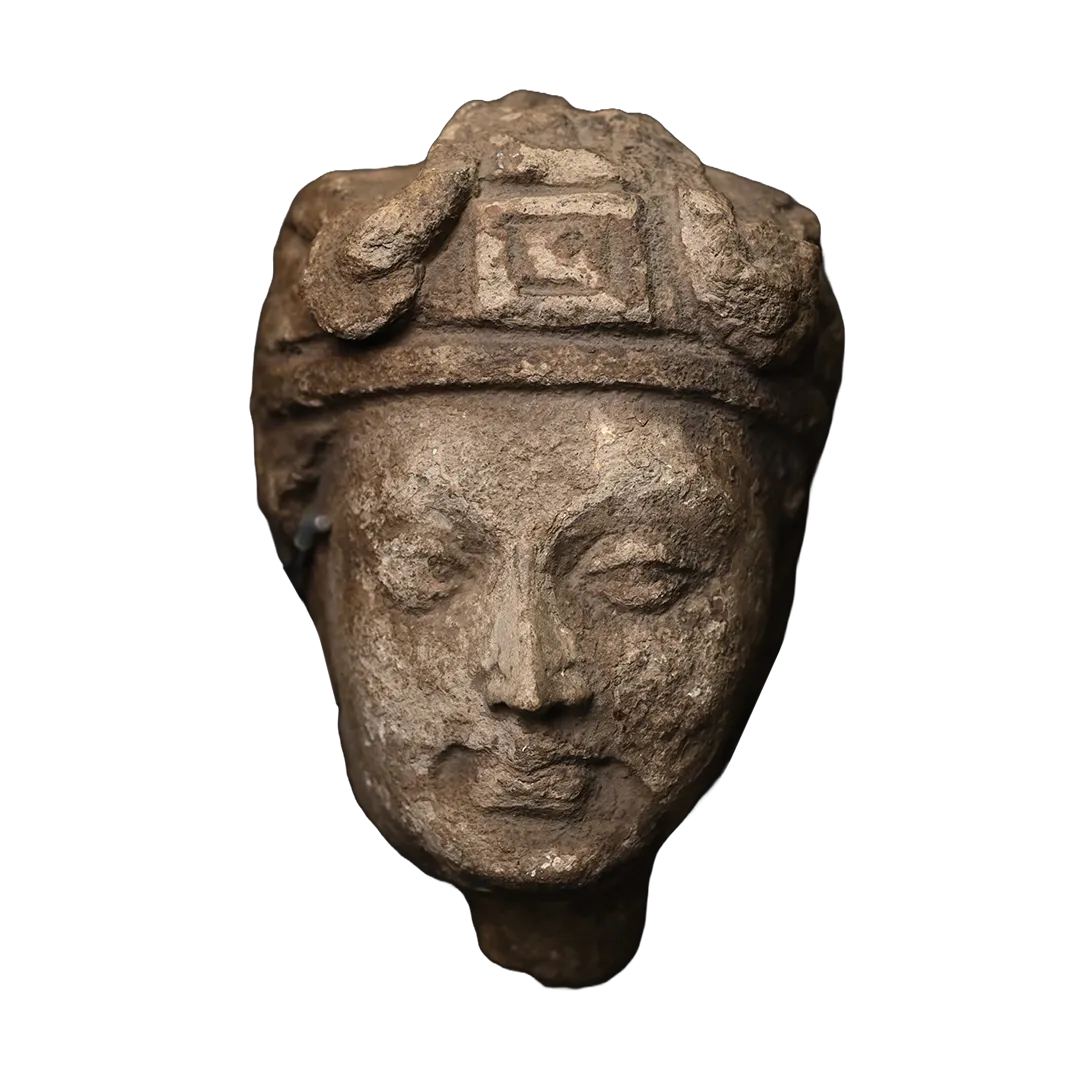
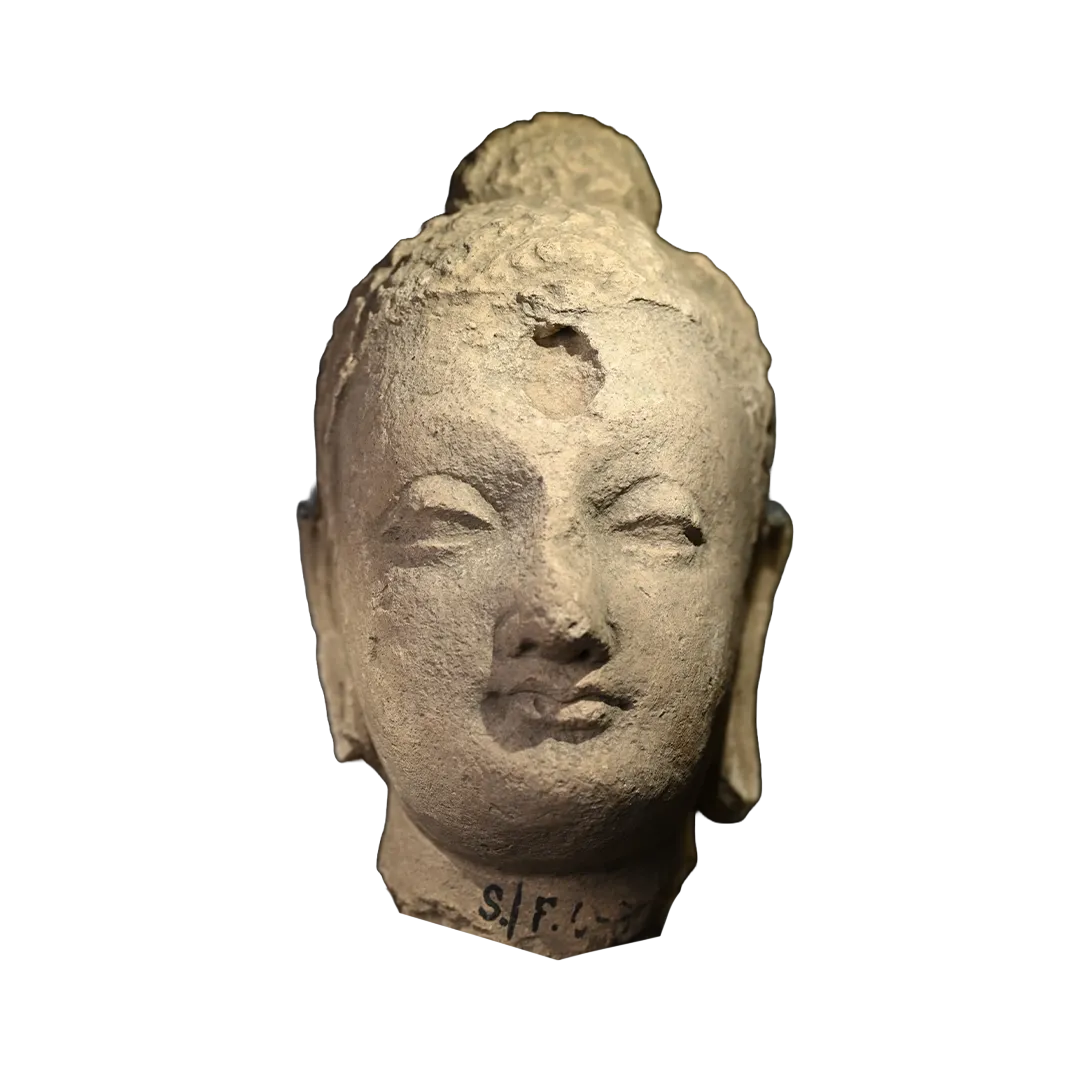
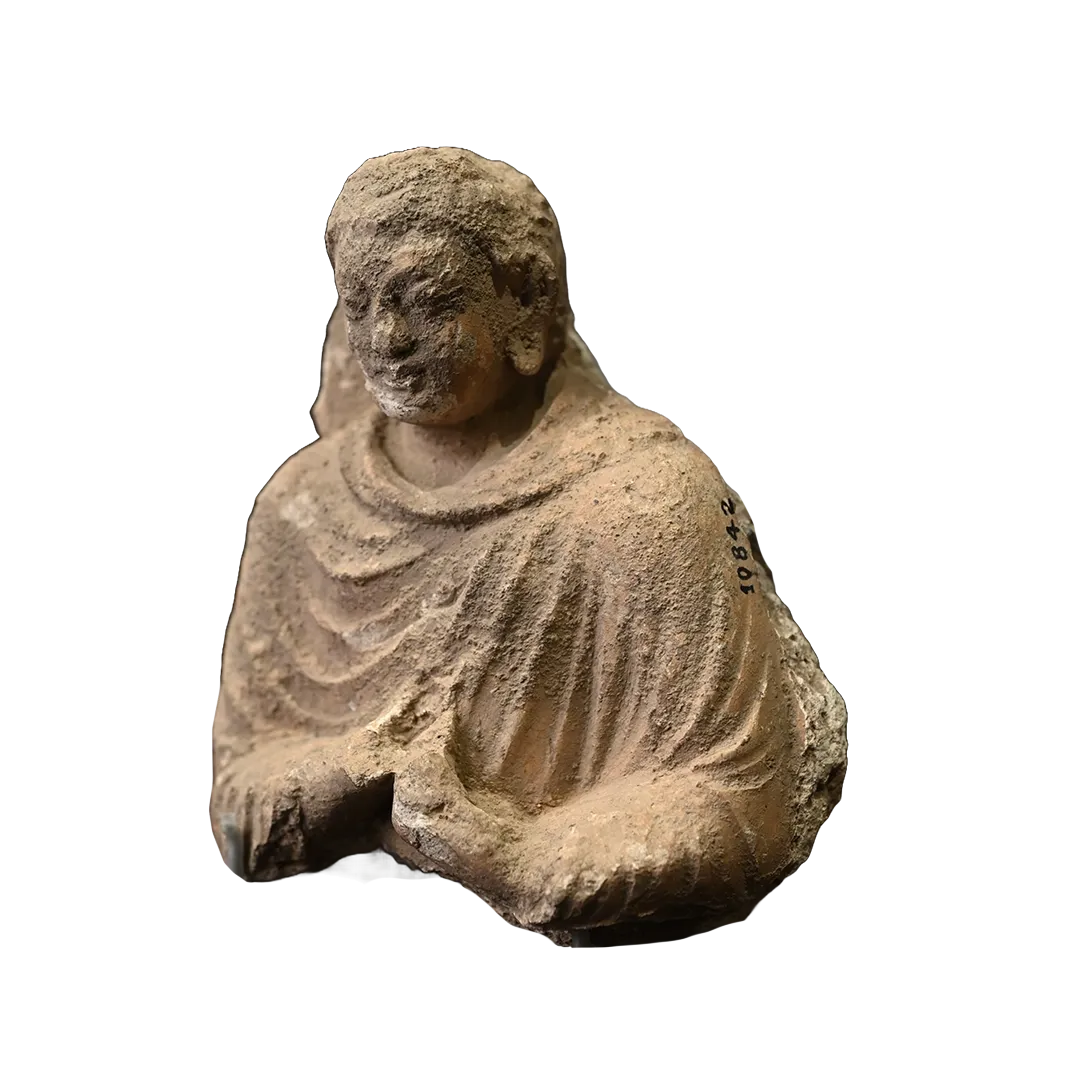
Buddhist heads, of varying sizes, ascribed to the
1 st century CE, from the Kushan dynasty. There is a visible Greco-Roman influence on the features and headgear of many of these stone figurines.
The Kushan dynasty was a period of great wealth in India, during which time Buddhist teachings and visual arts flourished. The Gandhara region,which was at the heart of the Kushan Empire, was considered to be a multi-ethnic society – due to its strategic position with direct access to the
overland silk routes and links to the ports on the Arabian Sea and also because it was ruled by several other Dynasties, such as Alexander the Great and his Indo-Greek successors. This eclectic confluence of cultures is visible in the art of the Kushan period, such as these Buddha heads. The Gandharan bodhisattva
therefore bear a strong resemblance to the Greeks and Romans, noticeable through elements such as curly hair, the topknot hairstyle, heavy drapery and defined headgears.
