


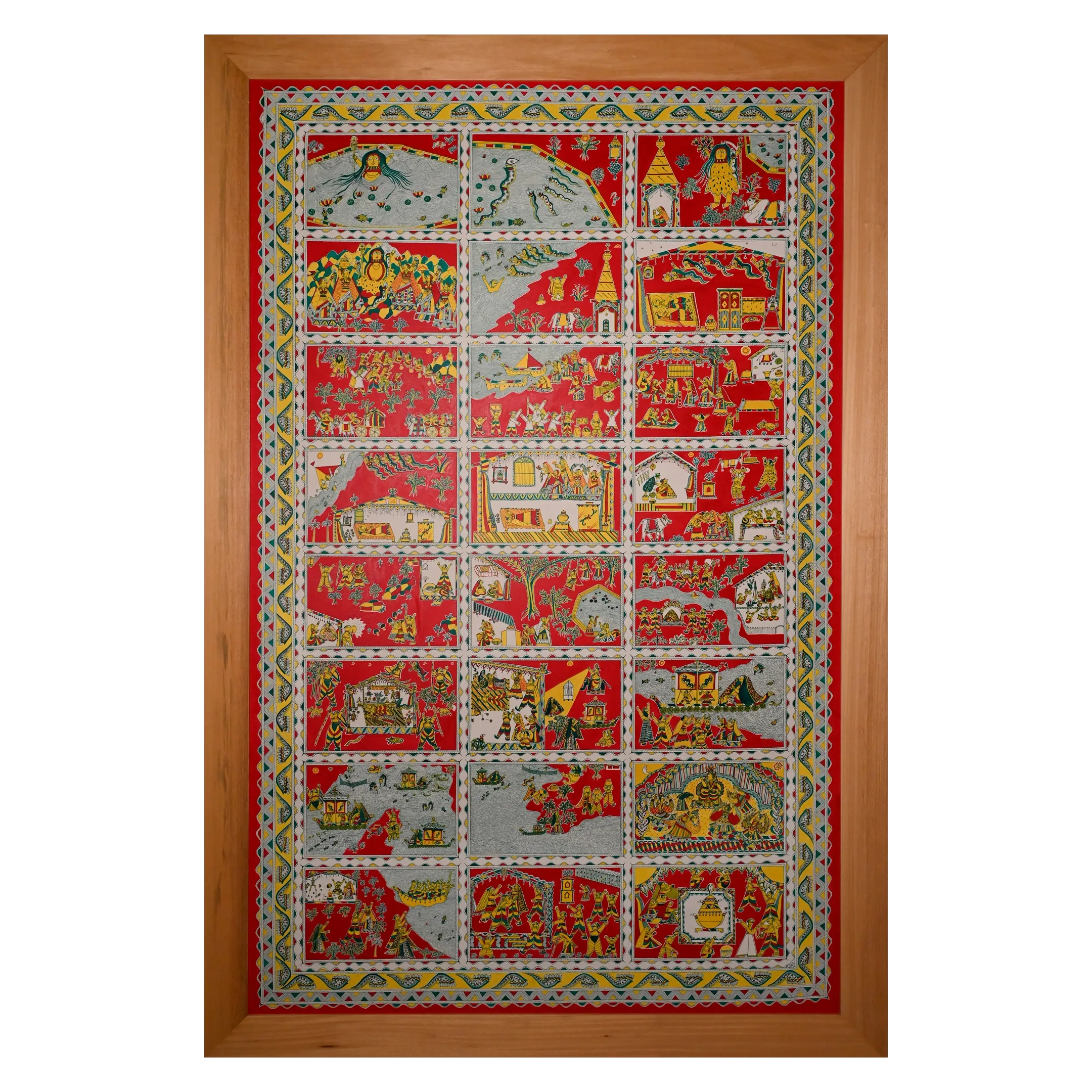
This description highlights Manjusha art, a traditional folk style from Bhagalpur, Bihar, centered on the folklore of Bihula-Vishahari. This narrative symbolizes the triumph of female strength and perseverance over fate. A State Award winner, Ulupi Kumari is a key figure in the revival of this form. Her featured work uses a sequential panel narrative to depict the entire legend.
The art visually narrates the journey of Bihula, representing her struggle against death and social marginalisation. It is traditionally used to decorate the Manjusha—a temple-like structure made of shola pith, bamboo, or jute. Once limited to ritual structures and kalash (pots), the art is now practiced on canvas, paper, and fabric. It is characterized by a vibrant palette of blue, yellow, and pink, with prominent decorative borders and cosmic symbols like the sun and moon. The painting includes figures such as Shiva, Chand Saudagar, Bihula, Lakhinder, and Netula Dhobi. A notable feature is the depiction of Vishahari’s five sisters in serpent form with free-flowing hair, symbolizing power and defiance. Beyond the characters, the artwork integrates
