


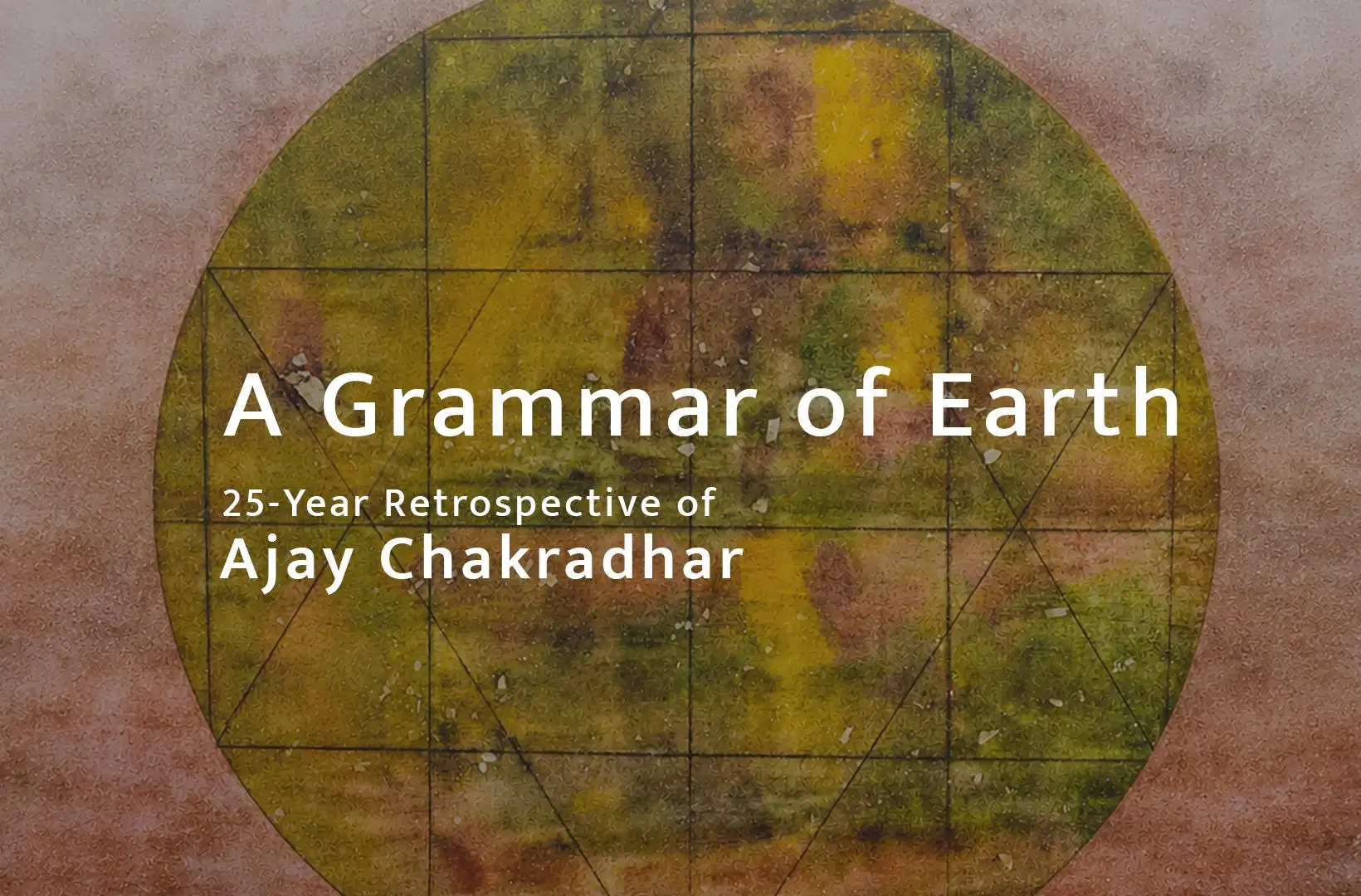
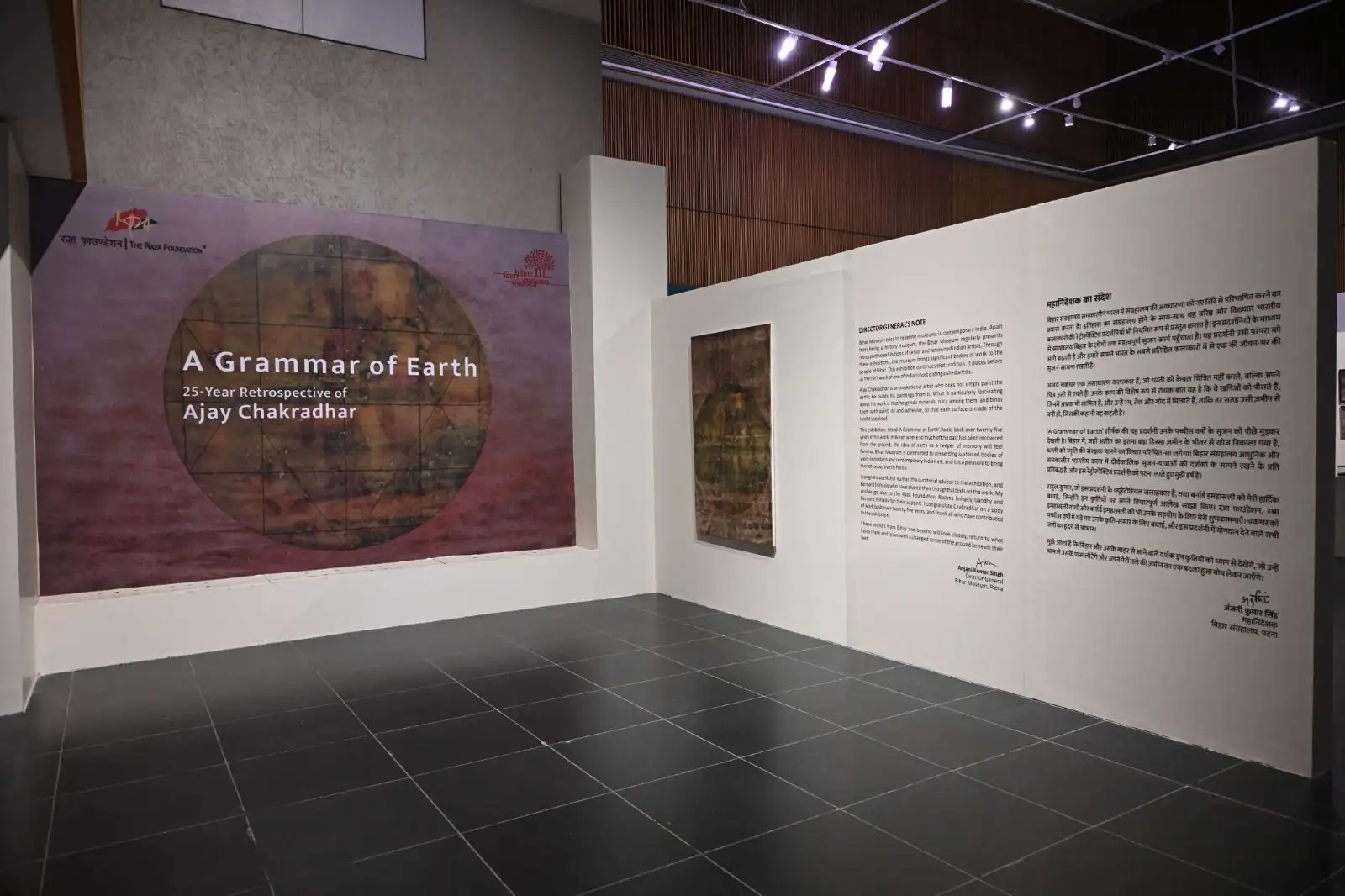
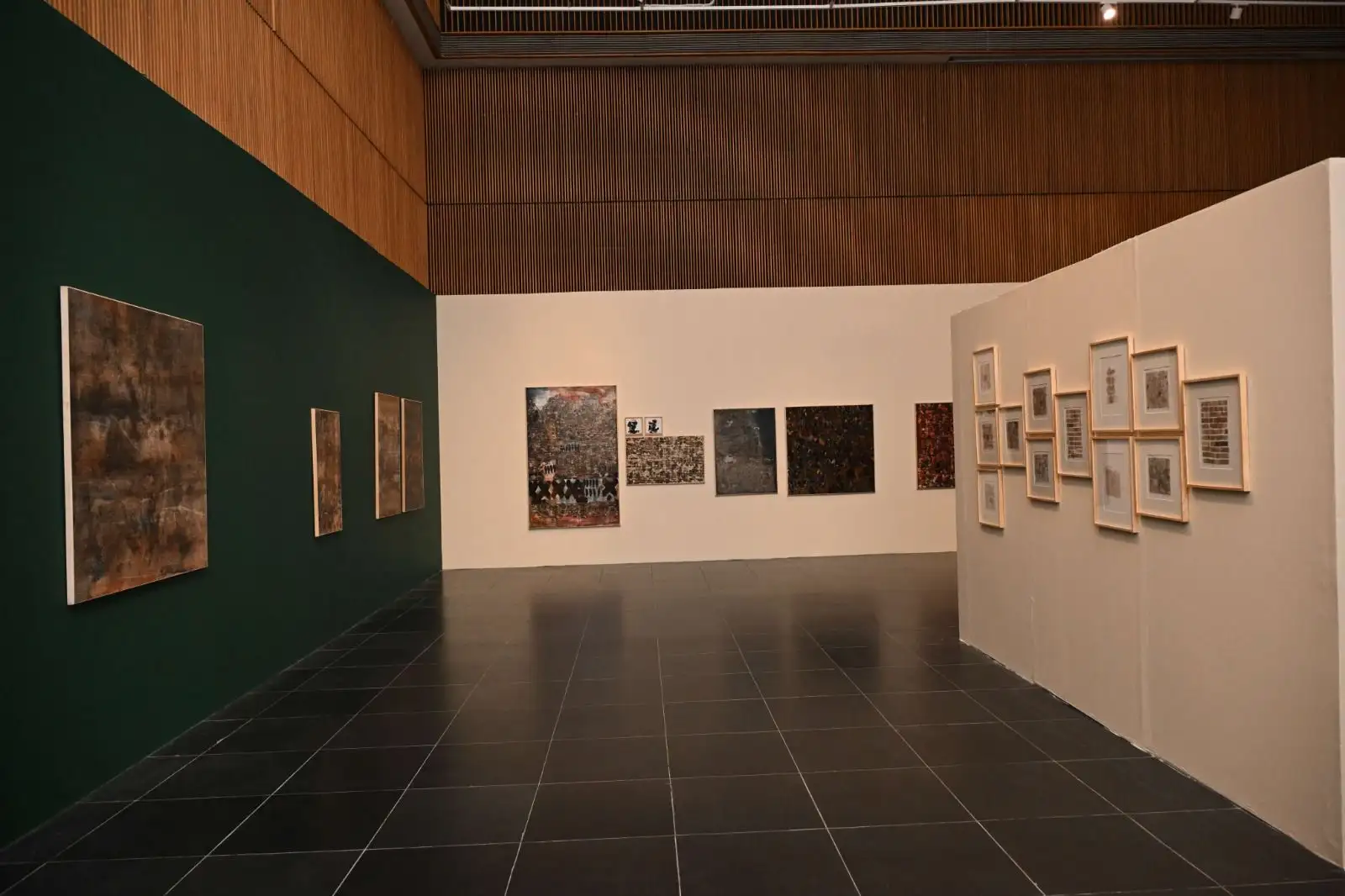
Most retrospectives follow a line through time. This one is more like a cut through the ground, with layers that carry the weight of those above them. For twenty-five years, Ajay Chakradhar has kept his attention on the surface. He does not paint pictures of land. He makes the land behave like a page. Mica is at the heart of his work. This shiny mineral splits into thin, glassy sheets, and he turns each one into a kind of script. Cut into strips and set in rows, the sheets look like tablets or account books, written in a language no one speaks any more. These works look like text, but we cannot read them. That is their subject: memory as writing that outlasts its meaning. One shape keeps returning, the circle. It may be a dark disc, a pale coin of mineral or a moon sinking into black. It is the only gesture that closes, and it closes around an absence. In the tall canvases, two dark upright forms stand like doorways to a home whose people have gone. Then the work grows lighter. On paper, see-through sheets overlap until the surface becomes light itself. A drawn or stitched lattice holds almost nothing. Earth that has been dug, crushed and bound remembers how it was handled. A broken shard speaks of the vessel it once was. Chakradhar’s fragments carry the same intelligence. To walk through this exhibition is to move from dense darkness to translucent light. We learn to read what cannot be read, and find that the unreadable is also a form of tenderness.
Must Know
